For Sublime Text 4

The lightweight AI coding agent
for Sublime Text.

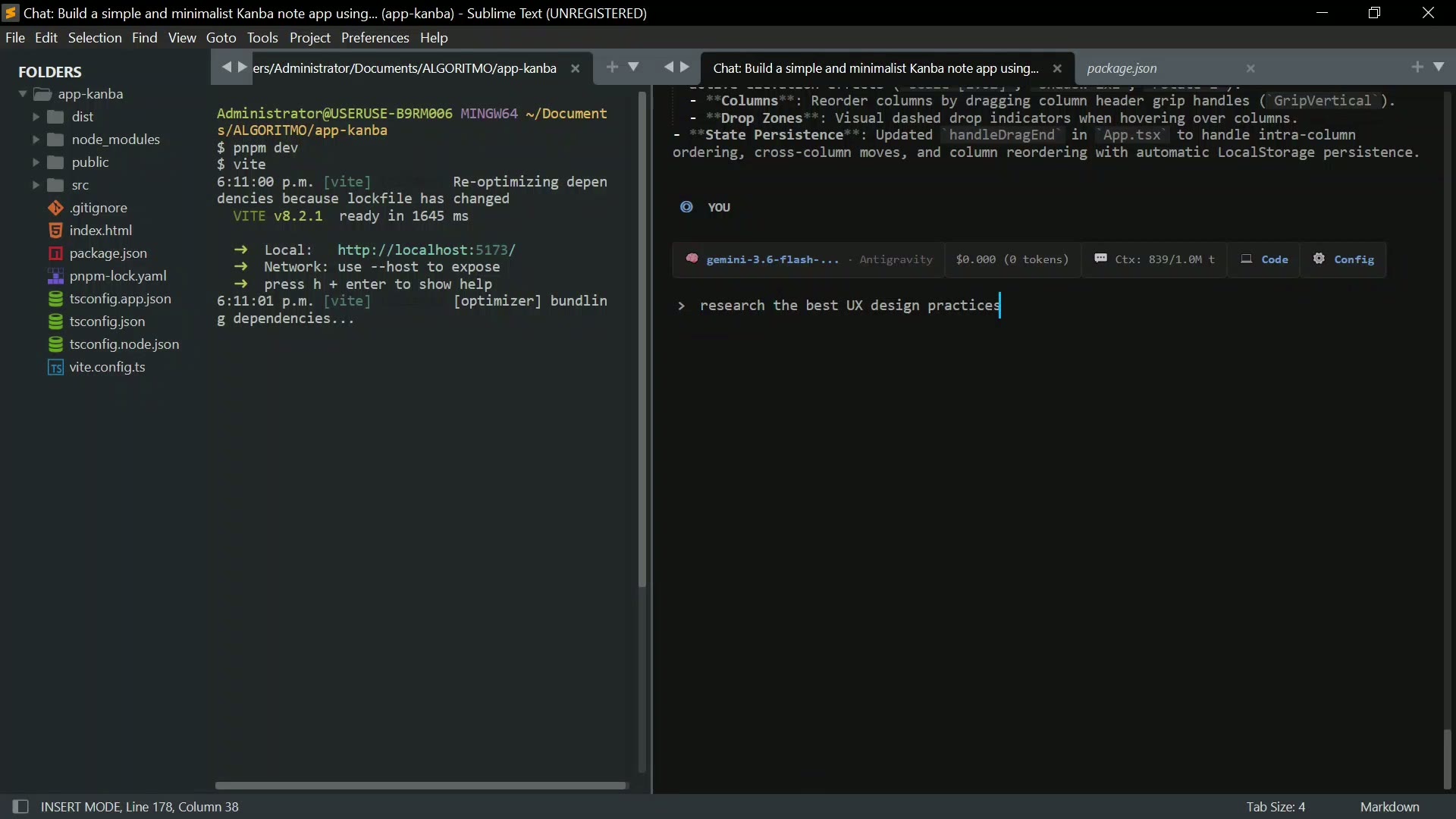
Stay in Sublime. Edit projects, use multiple models, run tools, and work agentically — without moving to a heavy AI IDE or adopting a terminal-first workflow.

Purchase · one-time Devices · up to 3 Runtime · inside Sublime
At a glance →
Side-by-side Sublime chatAPI, account, CLI, or local modelRead, search, edit, and run toolsWrites and commands ask by default
02 — Why Limitcode

Why not just use Claude Code, Codex, Pi or OpenCode in a terminal?

Terminal agents are excellent for terminal-first workflows — and Limitcode is not trying to replace them. It is built for developers who want the agent to live where they already work: inside Sublime Text.

If your workflow is terminal-first, keep it.

Running a coding agent in a shell, next to any editor, is a proven way to work. Claude Code, Codex, Pi, and OpenCode do that well, and Limitcode does not attempt to re-create every terminal-first workflow.

Limitcode exists for the other case: you want the agent inside the editor you already have open — reading the project on disk, applying approved edits, running approved commands — without adopting a terminal-centric loop. A realistic setup is Limitcode as the lightweight default agent inside Sublime, while terminal agents stay available for the specialized workflows that call for them.

More than a terminal embedded in Sublime.

The chat is a native Sublime view working against the project on disk, not a wrapped shell. That shows up in the details:

  • Send to Agent. Pass the current selection or the active file to the agent explicitly, with one shortcut — not by pasting content back and forth.
  • Permission rules. Reads and searches can stay frictionless while writes, shell commands, web access, and MCP calls ask by default. You set the boundaries.
  • Undo / Redo. Agent edits receive snapshots, so you can undo or redo them during the session without leaving the editor.
  • LSP diagnostics. After an edit, syntax and type errors from Sublime's LSP feed back to the agent — the editor itself stays part of the loop.
  • Scoped modes. Code, Architect, Ask, and Debug modes give each step a different toolset, instead of one always-maximal configuration.
  • Visible costs. Provider, model, reasoning effort, context, and per-session cost statistics are always one status bar away.
03 — Built to stay lightweight

Agentic workflow, without the heavy setup.

Limitcode is built to keep the Sublime workflow lightweight: the agent runs where your editor runs, with the boundaries you set, and gets out of the way when you don't need it.

01

No separate AI IDE

Limitcode is a package inside the Sublime Text you already use — your theme, keybindings, and projects stay exactly where they are. There is no new editor to move into and maintain.

02

No separate agent daemon for direct API providers

Direct API providers connect straight from the plugin: bring your own key and Limitcode talks to the provider from inside Sublime Text. Account, CLI, and local integrations use their own optional setup.

03

Stays out of the way when not in use

The agent lives in its own chat view. Close it and Sublime is exactly as it was — no separate Limitcode agent daemon runs for direct API providers, no filesystem roaming on its own, one task at a time, visible as it happens.

04

Your keys, your providers

Bring your own API keys or accounts: OpenAI, Anthropic, Gemini, OpenRouter, Mistral AI, Copilot, Codex, Antigravity, or local endpoints like Ollama and LM Studio. Provider relationships and usage stay yours.

04 — Capabilities

A working loop, not a prompt wrapper.

Limitcode combines project tools, approval boundaries, conversation memory, and recovery inside the Sublime workflow you already use.

01 / PROJECT

Work against the project on disk.

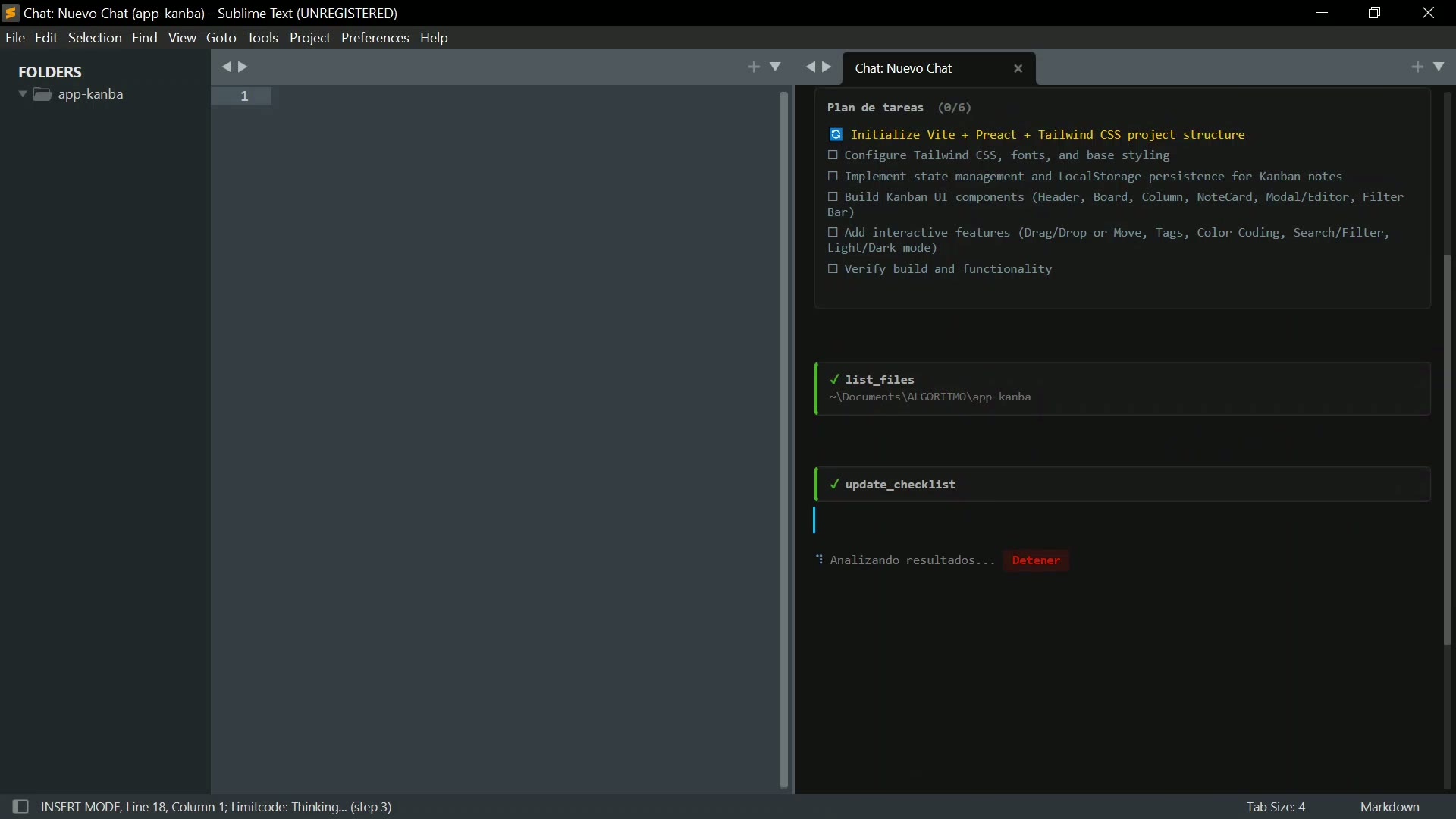
Limitcode can list, read, and search files, then create targeted edits, apply patches, and run build or test commands from the same conversation.

inspect filestargeted editspatchesbuilds & tests
02 / CONTROL

Mutating tools ask by default.

Reading and searching can stay frictionless. Writes, change previews, shell commands, web search and page fetching, and MCP calls follow configurable permission rules before they change state.

ask by defaultweb searchsession rulescancel anytime
03 / MEMORY

Keep context without losing recovery.

Conversations are saved by project, long sessions compact automatically, and agent edits receive snapshots for Limitcode Undo and Redo during the session.

sessionsauto-compactionundo / redo
04 / EXTEND

Bring the workflow your repository already uses.

Load repository instructions, reusable skills, configured MCP connections, and focused subagents without moving the task into a separate application.

project instructionsskillsMCPsubagents
05 - Workflow

The loop Limitcode uses on a task.

The conversation is the control surface. Tools inspect the project, make approved changes, and report each result back into the same session.

  1. 01 →

    Ask Describe the task.

    Open Limitcode Chat and describe the task. Type @ to insert a project path, or use Send to Agent to include the current selection or file.

    chat · @file paths · selection or file context
  2. 02 →

    Inspect Read the project on disk.

    Limitcode can list, search, and read files in the open workspace. Repository-level instructions can join the task context automatically.

    file discovery · project search · repository instructions
  3. 03 →

    Act Use dedicated tools.

    Targeted edits, file creation, patches, builds, tests, and shell commands follow your permission rules. Mutating tools ask by default.

    targeted edits · patches · shell commands · permissions
  4. 04 →

    Review Keep a recovery path.

    Tool calls and results remain in the conversation. Agent edits receive snapshots for Limitcode Undo and Redo while the session stays active.

    tool history · snapshots · Limitcode Undo / Redo

Limitcode Pro creating a Pomodoro app from scratch — scaffold, edits, build, verify. 1:15

06 - Providers

Connect the provider that fits the task.

Use a direct API, an eligible account integration, a CLI-backed session, or an OpenAI-compatible endpoint. Model usage and provider subscriptions remain separate from Limitcode Pro.

01 OpenAI direct API key
02 Anthropic direct API key
03 Google Gemini Google AI API key
04 GitHub Copilot eligible GitHub account
05 OpenRouter models available to your account
06 Mistral AI direct API key
07 Local or custom OpenAI-compatible endpoint

Your provider relationship stays yours.

Provider usage, subscriptions, rate limits, and model availability remain with the provider or endpoint you connect. Change provider or model from the active chat session.

OpenAI-compatible endpoints such as Ollama, LM Studio, LiteLLM, or a custom gateway can keep inference local.

Data flow Prompts and any context or tool results included in a request go to the provider or endpoint you selected. Credentials are stored in your Sublime Text settings. Activation uses the Limitcode service.
Compare every connection method →
07 - Installation

From download to first task in three steps.

No separate daemon is required. API-key providers work directly from the plugin; account, CLI, and local integrations use their own optional setup.

Step 01 / 03

Download the matching build

Keep the activation key from Gumroad and download the package matched to your Sublime Text build.

$ Choose the download for your Sublime build
Step 02 / 03

Install and activate

Copy Limitcode.sublime-package into Installed Packages, restart Sublime, then activate the device from the Command Palette.

$ Command Palette → Limitcode Pro: Activate License
Step 03 / 03

Connect a provider

Add an API key, sign in with a supported account, use an existing CLI login, or point Limitcode at a local endpoint. Then open Limitcode Chat.

$ Command Palette → Limitcode: Setup Provider API Key
Need installation help? Email Jawuil →
08 - Pricing

One price. No subscription.

Limitcode Pro is the paid Sublime Text package. Model usage and provider subscriptions are separate.

Early access · first 50 licenses

For the Sublime Text user who already lives in the command palette.

One-time purchase Up to 3 devices Provider usage not included
$29 early access · USD
Buy Limitcode Pro
Early access: only 50 licenses at $29, then the price goes up. Up to 3 personal devices. Periodic verification can allow up to 30 days offline. Secure checkout powered by Gumroad. License delivered instantly after purchase.
09 - FAQ

Short answers, real behavior.

Didn't find it?

Email hola@jawuil.dev in English or Spanish for installation, licensing, or product support.

Why not just use Claude Code, Codex, Pi or OpenCode in a terminal?

If you prefer a terminal-first workflow, those tools may be a better fit — Limitcode is not trying to replace them. Limitcode is designed for developers who want agentic coding integrated directly into Sublime Text. A realistic setup: Limitcode as the lightweight default agent inside Sublime, while still using terminal agents when a specialized workflow calls for them.

Does Limitcode require another background agent process?

Direct API providers work without a separate Limitcode agent daemon. Limitcode runs through Sublime's plugin environment, while optional CLI, account, and local integrations may use their respective runtimes.

Does Limitcode support diffs?

Yes. Limitcode supports basic change previews (diffs) so you can see proposed edits before they are applied.

Does it work with my Sublime Text version?

Limitcode targets Sublime Text builds 4050+. Download the package matched to your Sublime build.

Which AI providers can I use?

The main integrations are OpenAI, Anthropic, Google Gemini, GitHub Copilot, OpenRouter, and Mistral AI. Limitcode also includes OpenAI-compatible adapters for services such as DeepSeek and custom or local endpoints including Ollama, LM Studio, and LiteLLM. Model and tool compatibility still depends on the selected provider.

Do I need my own API key?

It depends on the integration. Direct API providers require your own key. Copilot uses an eligible GitHub account, CLI-backed providers use an existing local login, and local endpoints may not require a key. Provider usage or subscriptions are not included with Limitcode Pro.

How many devices can I activate?

Up to three personal devices. Periodic verification refreshes offline access, which can continue for up to 30 days after a successful check.

What happens before an edit or shell command?

Read, list, and search tools are allowed by default. File writes, change previews, shell commands, web search, page fetching, and MCP calls ask by default. You can change those rules in Limitcode settings, cancel an active run, and use Limitcode Undo or Redo for agent edits during the session.

What leaves my machine?

Your prompt and any file context or tool results included in a request are sent to the provider or endpoint you selected. Activation and periodic verification contact the Limitcode service. Local model inference can stay local, but occasional network access is still required.

Does it read unsaved buffers automatically?

No. File tools operate on the version stored on disk. Use Send to Agent when you want to include the current selection or the active file contents explicitly.

Where can I get help?

Email hola@jawuil.dev for installation, licensing, provider setup, bug reports, or feature requests.